Technology partner for European consortia

A technology partner for Erasmus+ and other EU consortia. We build the digital results a project promises: web platforms and portals, mobile and tablet apps, VR, AR and serious games. We make them accessible, release them openly where the grant asks for it, and keep them running after delivery.

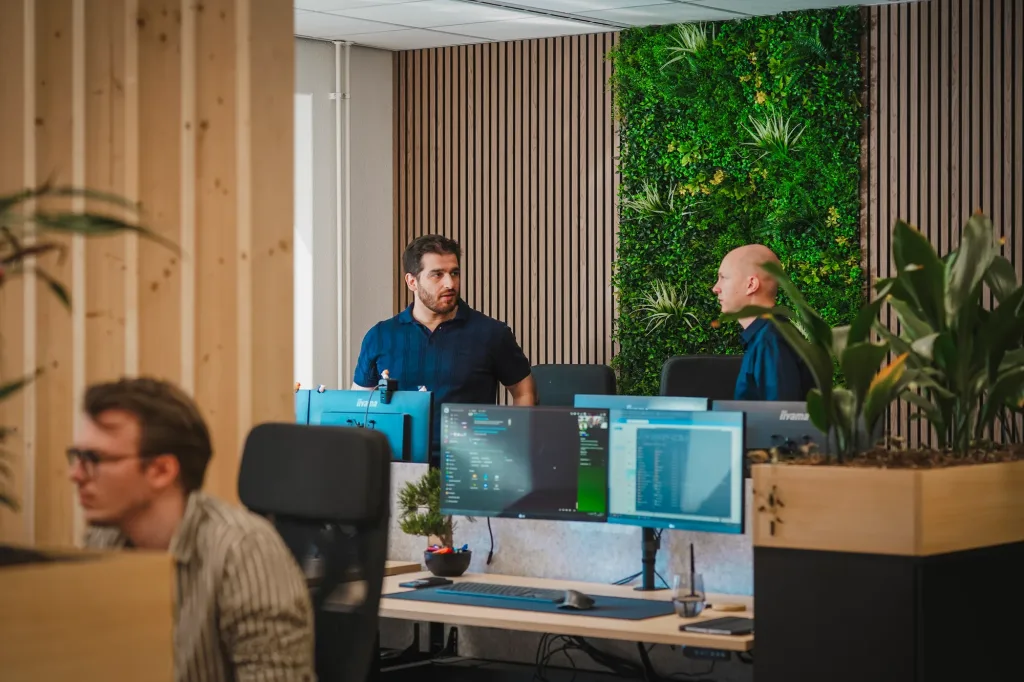
Three developers in the studio: two talk across desks with code on the screens and one works in the foreground, with a wall of plants behind them

What we build for partners

Web platforms and portals

Online learning environments, project and results platforms, and dashboards where organisations follow use and progress. We also run our own client portal, where partners follow each development sprint.

Mobile and tablet apps

Apps for phones and tablets, including augmented reality (AR) that adds a digital layer to the real world, and tablet apps that let instructors steer a session.

VR and XR experiences

Role-plays, simulations and multiplayer training for standalone headsets such as Meta Quest 3 and Pico, and interactive 360° video with gaze control for events, exhibitions and heritage sites.

Serious games

Games for learning and awareness, for a browser, a tablet or a headset.

Headset device management

Our own device-management software to configure, update and manage fleets of Pico headsets.

Hosting and maintenance

Updates, technical support and new content after delivery, and hosting planned from the proposal onwards.

Accessibility

Designed in from the start, for the web and for VR and AR.

Our studio VR-Innovations does the building; Crow Group brings that work into European cooperation.

Immersive technologies, often grouped as extended reality (XR), are tools like any other. What we build follows the learning design of scenario-based learning and fits the consortium's work plan, as described under EU project coordination.

In the Erasmus+ project Sensing Otherwise, we are lead partner for the technological outputs (VR, AR and digital platform).

For Dutch clients, our studio also builds augmented reality by our studio (in Dutch) and digital twins (in Dutch).

Our technology stack

  • VR, AR and games: Unity, with AR Foundation for ARCore (Android) and ARKit (iOS), and native Android where a project needs it.
  • Web platforms, portals and app back ends: Node.js, MongoDB and React.
  • 3D content: Blender, Substance Painter and 3D Coat, and 360° cameras for video.
  • Devices: our own device-management (MDM) software for Pico headsets.

We build in modules, so 3D assets and code can be reused and extended in a later phase or a follow-up project.

More about our software and licensing for Dutch clients: VR software and licences (in Dutch).

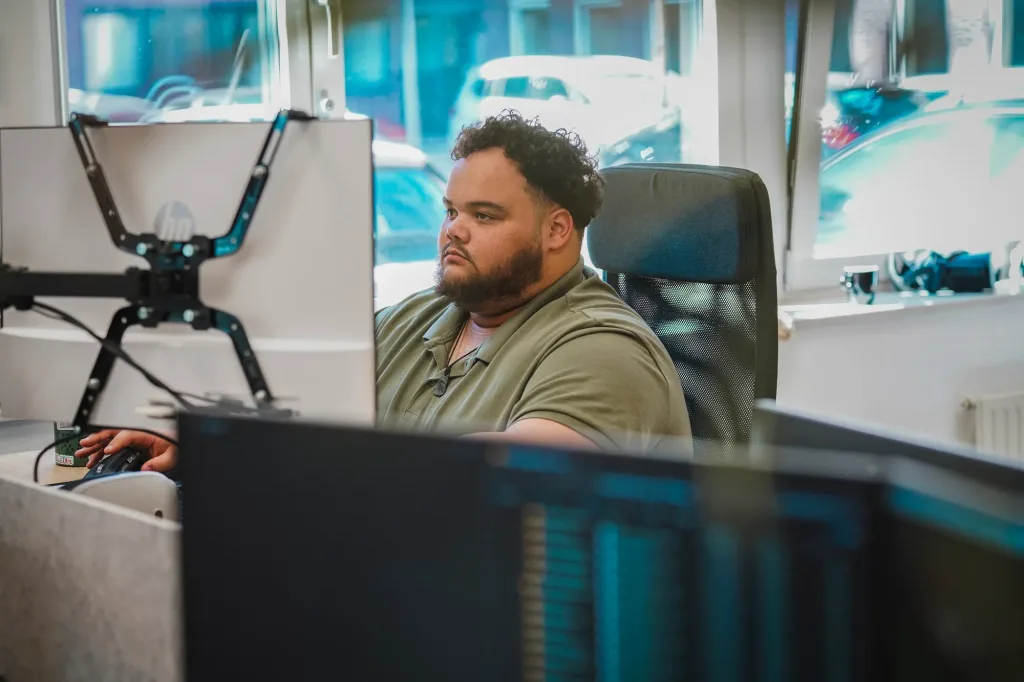
A developer concentrates on his work behind several monitors at a desk by the window

Accessibility and openness

Accessibility from the start

Accessibility is part of the design, not a check at the end. For the outputs of Sensing Otherwise, the target is WCAG 2.1 AA, with multilingual and multimodal access.

WCAG was written for the web. For VR and AR, the W3C XR Accessibility User Requirements describe what users need, and we use them as our reference for new VR and AR work.

You can see this in our work:

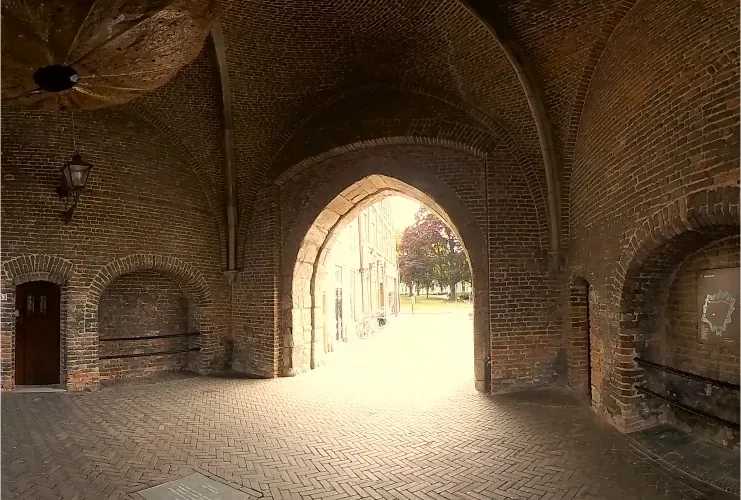
  • an accessible VR tour of the Sassenpoort, developed with Toegankelijk Zwolle for people who cannot climb the medieval gate's stairs, with gaze control and their own route and pace;
  • a VR training for newcomers that works without controllers and starts in the learner's own language;
  • a VR job preview that uses only the hands, with no walking or teleporting.

How we check accessibility on this website is set out in our own accessibility statement.

Open where possible, clear where not

Erasmus+ grant agreements ask that educational materials are available online, free of charge and under an open licence. In Sensing Otherwise, the educational materials will be released under an open licence.

Clear where not: before the work starts, we can set out with the consortium which of our existing tools, code and 3D assets a result builds on, and on what terms partners can use them.

For our design team, the work behind accessible, openly licensed results maps to DigComp 3.0 competences 5.2 Identifying needs and digital technological responses, which includes accessibility, and 3.3 Copyright and licences. Read Framework fit: how our work maps to EU competence frameworks.

Device management, hosting and maintenance

Devices

Our own device-management software lets us manage Pico headsets and their content from one place. Headsets can be configured and delivered ready to use.

Kiosk use

For events and exhibitions, an experience can run in kiosk mode and reset itself when the headset comes off, as in our kiosk-mode 360° VR dive for Natuurmonumenten.

Maintenance

After delivery, we can maintain an application under an annual licence that includes updates, technical support and new content.

Hosting

Erasmus+ grant agreements ask that a project website stays valid and up to date. If hosting stops, the website has to be removed from the domain registration so that nobody else can take the domain over. We plan, budget and document hosting and maintenance from the proposal onwards.

Applied AI, where it serves learning

We add AI to learning tools only where it serves the learning goal, and we say plainly when AI is not the right tool. Our approach starts with the task, then the model.

What we have built

Spoken interaction with a virtual passenger in a VR role-play for airport security staff, and on-device person detection in an augmented-reality feasibility study for the Dutch police.

What we can build on request

Assistants that answer from your own documents, show the source and hand over to a person when the answer is not in the sources. This is an offer, not a delivered case.

Selected technical cases

All our cases are in our immersive learning case studies.

Share your call and work plan

Send us the call, the draft work plan and the digital results your consortium needs. We will tell you what we can build, what it takes to keep it running, and where we would involve others.

Partner with us Ask a technical question