Safety is learned by doing
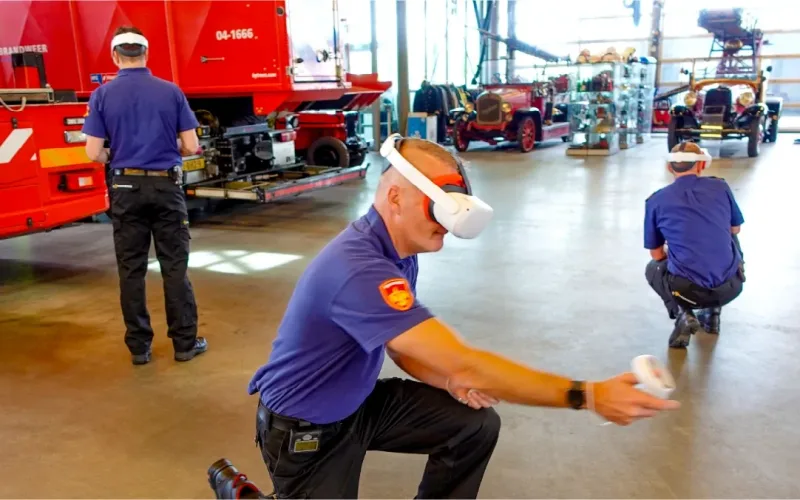
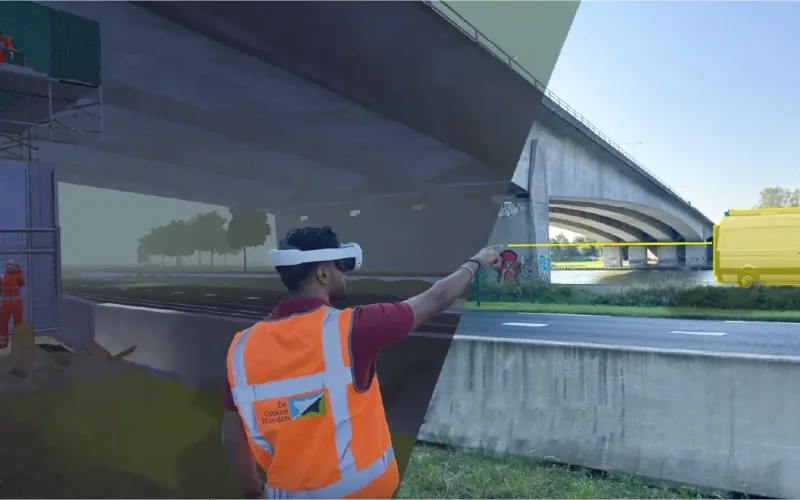
Safety is not learned only from a book or a presentation. In an emergency, people need to recognise what is happening, act, and know what to do next.
The modules are designed to be low-threshold, realistic and directly usable at work.
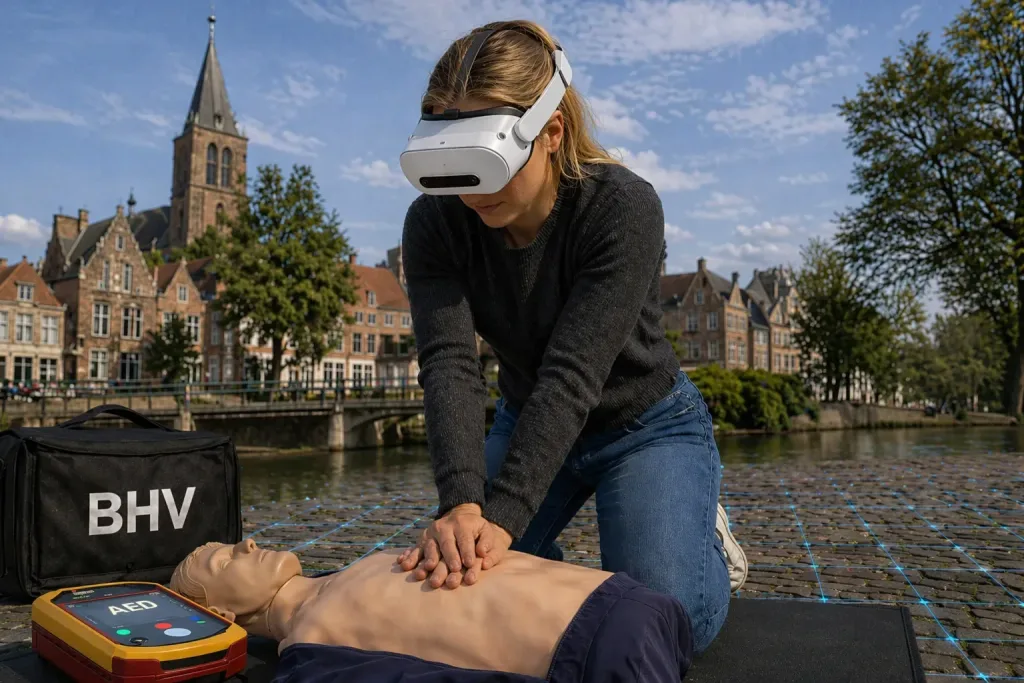
Resuscitation with an AED
The learner goes through a resuscitation from start to finish: speaking to the victim, checking consciousness and breathing, and calling the emergency number 112.
During chest compressions, the learner gets direct feedback on rate and depth. They then attach the AED pads and follow the device's spoken instructions. A short quiz closes the module.
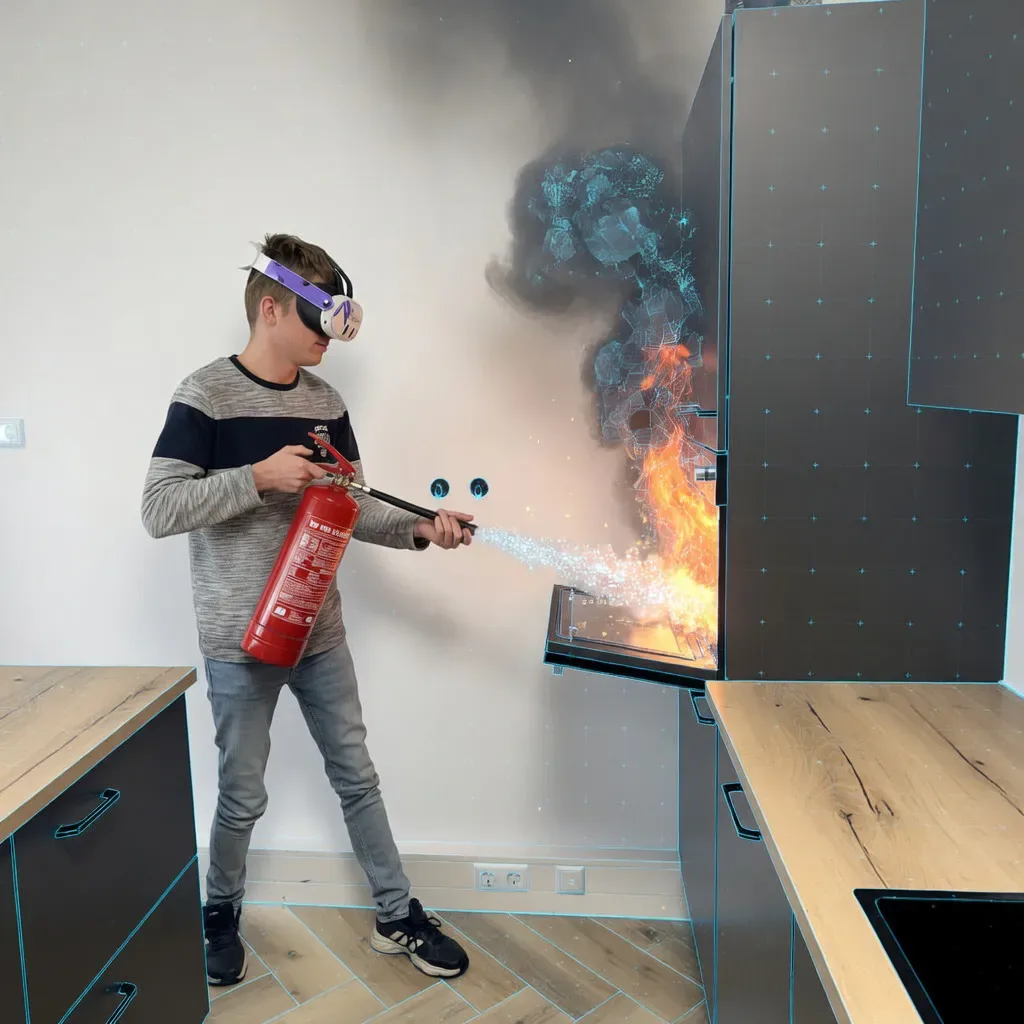
Using a CO2 fire extinguisher
The learner pulls the pin, aims and puts out a fire in a controlled way: first a burning microwave, then a pan of burning oil. A quiz closes the module.
The module also runs in passthrough. The learner then sees their own room through the headset cameras, with the fire projected into it.
Smoke and orientation
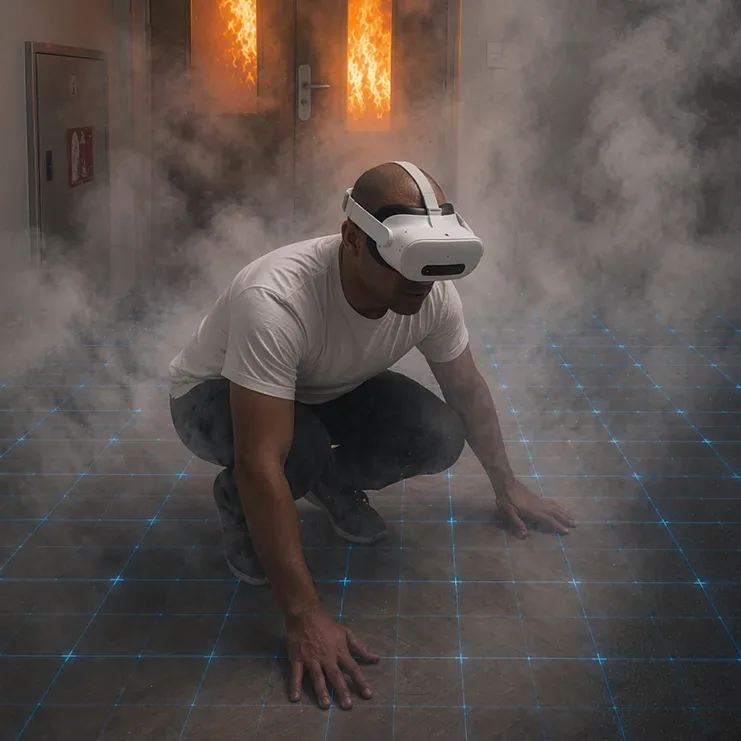
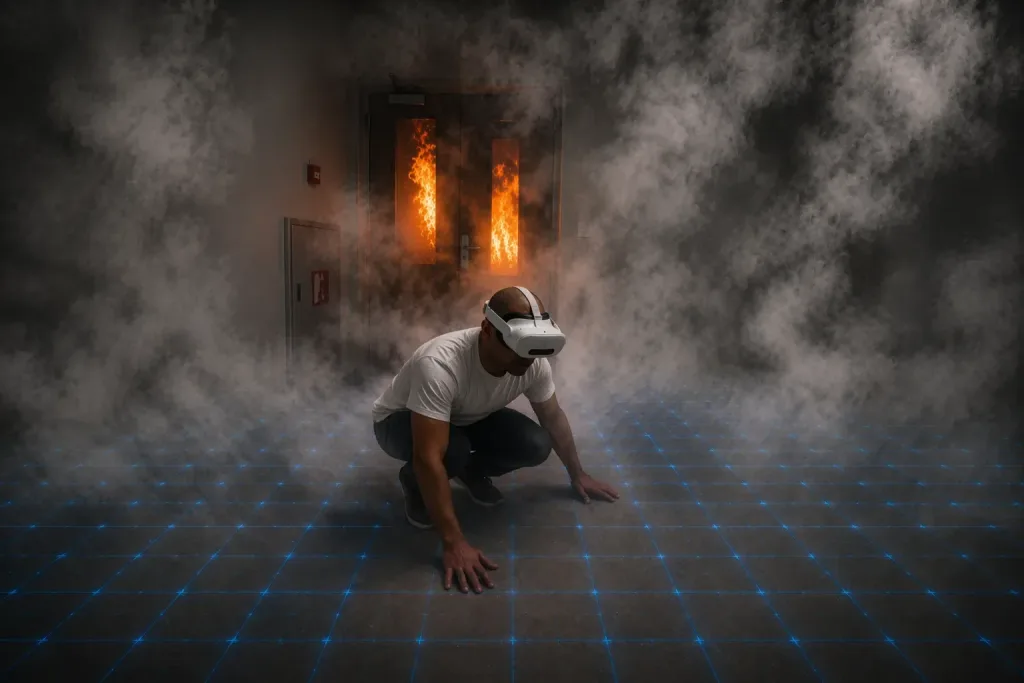
In the smoke module, which also runs in passthrough, the learner meets light smoke from a burning waste bin, or a room full of dense smoke.
It shows how quickly smoke takes away your sense of direction, and helps learners recognise the early signs of a fire.
Choosing the escape route
The learner reads an evacuation plan and practises making the right choices during an evacuation. A quiz closes the module.
Short modules for practice at work
Each module is short. Employees put on the headset and start: there is no complex installation and no long implementation.
Headsets are set up before delivery, so organisations can run the sessions themselves. The modules are designed for onboarding, safety awareness, repeat practice and training on site.
Planning something similar for your own learners? You can talk to us about a project like this.